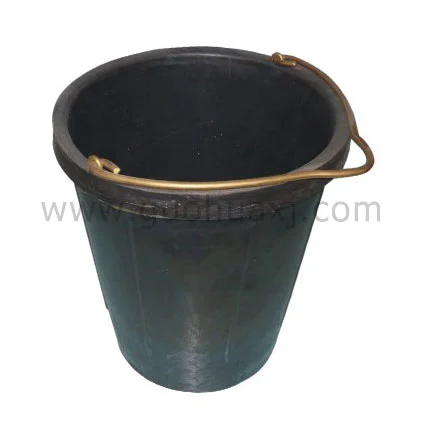
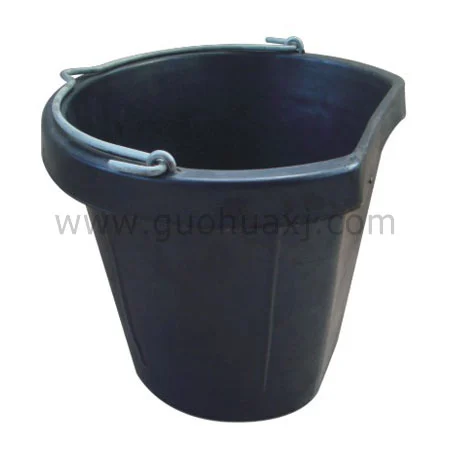
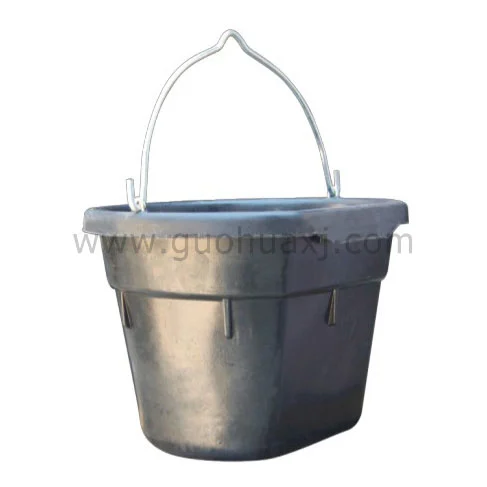
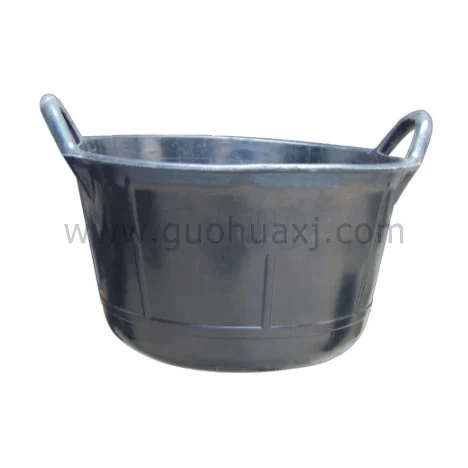
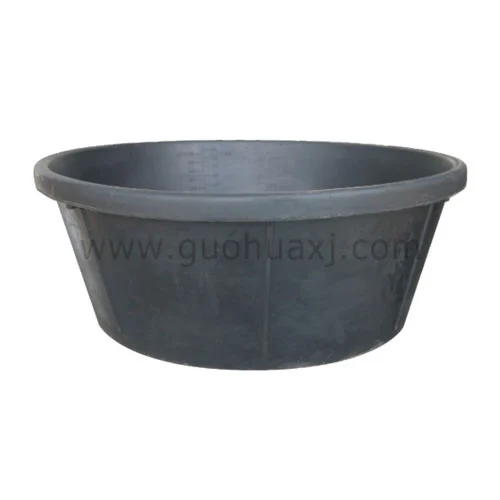
A rubber bucket is a general-purpose container that is meant to be treated roughly. It can be dropped, kicked, stepped on and left in the sun, and it springs back. That is why the same product turns up on building sites, in stables and in workshops. This guide lists the main uses and the capacity that tends to suit each one. The weights come from our catalogue and assume water as the contents.
Uses at a glance
| Field | Typical jobs | Capacity that tends to suit |
|---|---|---|
| Construction | Carrying water, mixing mortar and plaster, moving debris, tile adhesive | 12–20 L buckets; 25–40 L tubs for mixing |
| Agriculture and stables | Feed, water, mineral and supplement feeding, carrying silage | 10–20 L buckets; 25–56 L tubs for troughs |
| Workshop and industry | Parts washing, offcuts, spill containment, carrying loose materials | 7–14 L buckets; shallow pans for parts |
| Garden and landscaping | Watering, carrying soil and stones, weeding, mixing compost | 8–20 L buckets; 28–40 L tubs |
| Cleaning and facilities | Mopping, washing vehicles, carrying equipment | 7–12 L buckets |
Construction
On a building site buckets are used for water, mortar, plaster and debris, and they are thrown on to scaffolds and trucks. A 12 L bucket such as the BB012A weighs 2.2 kg empty and about 14 kg when full of water, which is a load most workers can carry up a ladder. For mixing, a wide tub is easier than a tall bucket: the BT028 (28 L, 540 × 400 × 170 mm) gives a large mixing surface and stays low to the ground.
Agriculture and stables
Animals knock buckets over and step on them. A flexible rubber body does not crack from a hoof, and it can be flexed to get frozen water out. Buckets of 10–20 L are the usual size for individual horses or calves; tubs of 25 L and above work for shared water or feed. For a full guide to sizes by animal see rubber feed tubs for horses and livestock.
Workshops and industry
In workshops buckets hold offcuts, parts and cleaning liquids. Shallow rubber pans such as the rubber pan range (98–250 mm tall) make parts easy to reach and tolerate dropped tools. If the bucket will hold oils, fuels or solvents, confirm the rubber compound first; some compounds swell in contact with them.
Garden and household
For watering and carrying soil, a 10–14 L bucket is easier to carry for long distances than a 20 L bucket. Many gardeners prefer a wide, low tub for mixing compost and potting soil because it can be shovelled into.
Choosing by weight, not only volume
Capacity tells you what the bucket holds; weight tells you whether it can be carried. A full 20 L BB020 weighs about 23 kg with water, and more with wet sand or mortar. If a bucket is carried by hand over distance, pick a smaller size and make more trips. For help converting between litres and gallons, see our rubber bucket size guide.
Browse the full catalogue or request a quote.