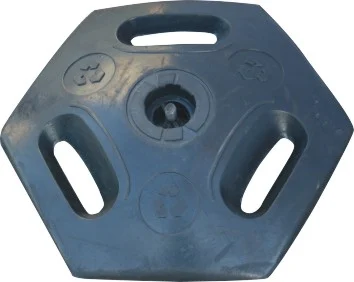
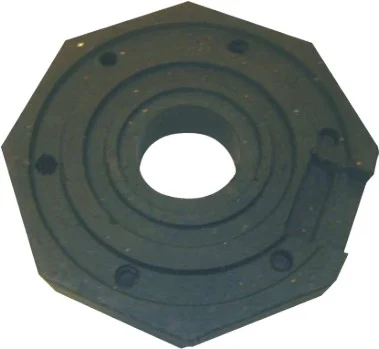
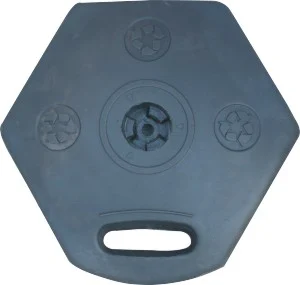
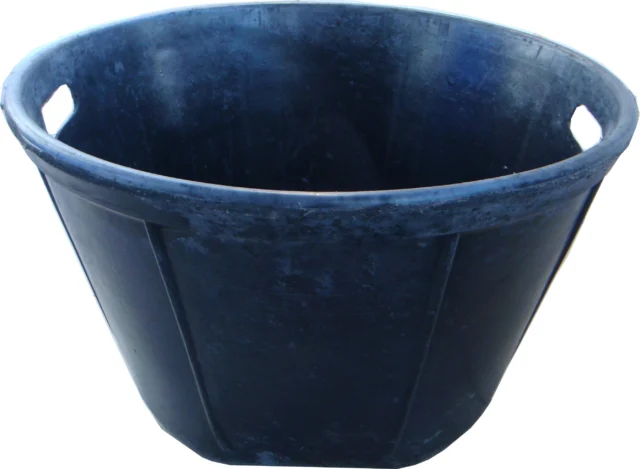
Rubber is used outdoors in all climates, but it does not last forever in sunlight. This guide explains what outdoor weather does to rubber, what temperature ranges the common rubbers handle and what to tell a manufacturer. It applies to buckets, tubs and bases such as our rubber bases that stand outside all year. The figures are typical for the rubber type; the actual limits depend on the specific compound.
What outdoor weather does to rubber
- Ultraviolet light. Sunlight breaks down the surface of the rubber over months and years. The first sign is a dull, chalky or finely cracked surface.
- Ozone. Ozone in the air attacks stretched rubber and forms cracks at right angles to the stretch. Parts under tension age faster than loose ones.
- Heat. Warm temperatures speed up ageing, which makes the rubber harder and less flexible over time.
- Cold. Rubber becomes stiffer when it is cold and below a limit it becomes brittle. Each rubber type has its own limit.
- Water and frost. Rubber is not harmed by water and rain, and ice can be flexed out of a bucket without damage.
Typical temperature ranges
| Rubber type | Typical range °C | Outdoor ageing resistance |
|---|---|---|
| Natural rubber (NR) | −50 to +70 | Fair; needs protection against ozone |
| Styrene-butadiene (SBR) | −45 to +100 | Fair to good with protective additives |
| EPDM | −50 to +150 | Very good; designed for weather and ozone |
| Nitrile (NBR) | −30 to +100 | Fair; chosen for oil resistance |
These are general-purpose ranges. Continuous exposure at the top of a range reduces service life, so allow a margin. Short peaks are less harmful than constant heat.
What helps outdoors
- Black compounds. Carbon black absorbs ultraviolet light and protects the rubber. Black products last longer in the sun than light-coloured ones.
- Protective additives. Anti-ozonants and anti-oxidants slow the ageing. They are part of the compound design.
- Thickness. A thick wall takes longer to age through than a thin one.
- Shade and storage. When products are not in use, keep them out of direct sun. See how to clean and care for rubber buckets.
Bases and posts outdoors
A rubber base on a car park or a road works site faces sun, rain, frost and vehicle contact all year. Our rubber bases are made from heat-resistant, low-odour rubber and can be used indoors and outdoors, including in low temperatures. Tell us the climate and the lowest and highest temperatures, and whether the base is also exposed to oils or de-icing salts, and we will match the compound.
What to tell the manufacturer
- the country or climate (hot and sunny, wet, freezing winters);
- the lowest and highest temperature the product will see;
- whether it is in constant sun or in shade;
- any contact with oils, fuels, salt or chemicals;
- the service life you expect.
Request a quote and include these details.