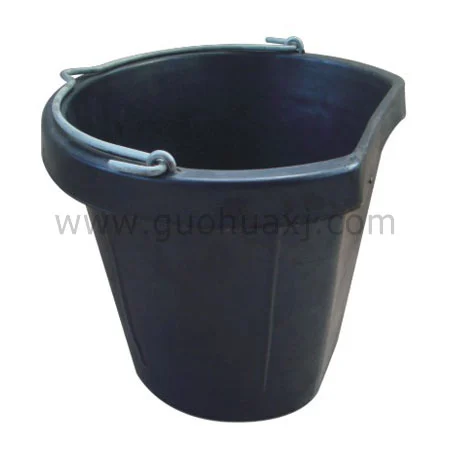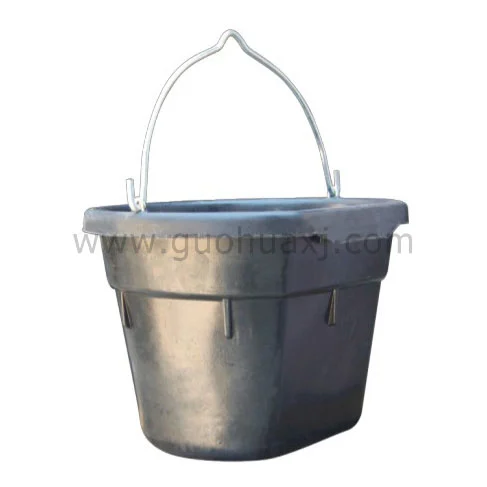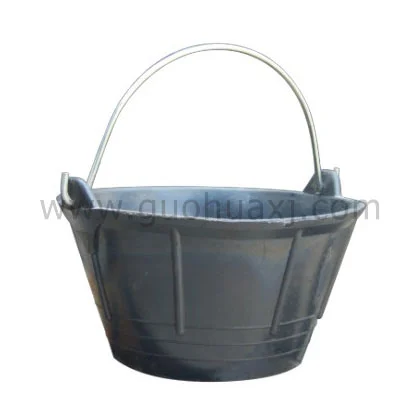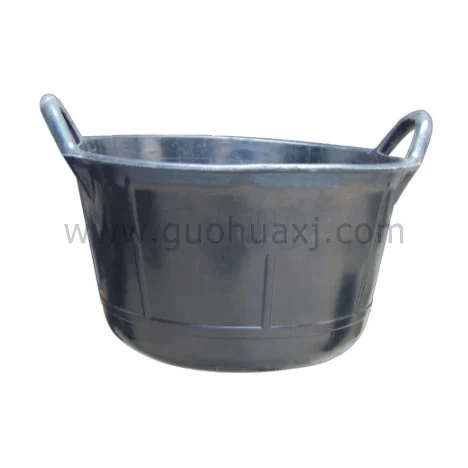
Both rubber and plastic buckets are widely used, and neither is better in every situation. The right choice depends on how the bucket is treated, what goes in it and how far it is carried. This guide compares the general characteristics of the two materials. Specific grades vary, so treat the statements below as tendencies, not guarantees.
Rubber and plastic at a glance
| Property | Rubber bucket | Rigid plastic bucket |
|---|---|---|
| Flexibility | Flexible; gives under a knock and returns to shape | Rigid; can crack or split on hard impact, depending on the grade |
| Weight | Heavier for the same volume | Lighter |
| Cold weather | Generally stays flexible | Some grades become brittle when cold |
| Price | Usually higher | Usually lower |
| Typical use | Construction sites, farms, workshops, rough handling | Light household and general use |
Weight: the main trade-off
Rubber is the heavier material. A 20 L rubber bucket such as the BB020 weighs 3.1 kg empty, and a 12 L bucket such as the BB012A weighs 2.2 kg. If a bucket is carried all day over long distances, that extra weight counts. If it is mostly filled, set down and moved a short way, it matters much less.
Impact and rough handling
Buckets on construction sites and farms get dropped, kicked, stepped on and thrown on to vehicles. A flexible rubber body takes these knocks by deforming and returning to shape, where a rigid plastic body is more likely to crack. For that reason rubber buckets and tubs are widely used for mixing, carrying debris, feed and water in construction, agriculture and industry.
Cold weather
Many rigid plastics lose impact strength as the temperature falls, and some grades turn brittle. Rubber generally stays flexible in the cold, which is one reason it is chosen for outdoor work in winter. If your buckets will be used well below freezing, tell us the lowest temperature and we will advise on the compound.
Contents: check chemical compatibility
Neither material suits every liquid. Some oils, fuels and solvents attack certain rubber compounds, and some chemicals attack certain plastics. If the bucket will hold anything other than water, feed, sand or cement mix, tell us what it is and the temperature. We can confirm the right rubber compound or make the product to your formula requirement as an OEM order.
Which should you choose?
- Choose rubber when buckets are dropped, stepped on or left outdoors, and when durability under rough handling matters more than weight.
- Choose plastic when buckets are only carried lightly and low cost and low weight matter most.
- For large volumes, consider a flexible rubber tub or a rubber pan instead of a bucket.
Browse the rubber buckets or send us your requirements for a quotation.